Remy Jungerman
BLUE OBIA
September 12 – October 12, 2025

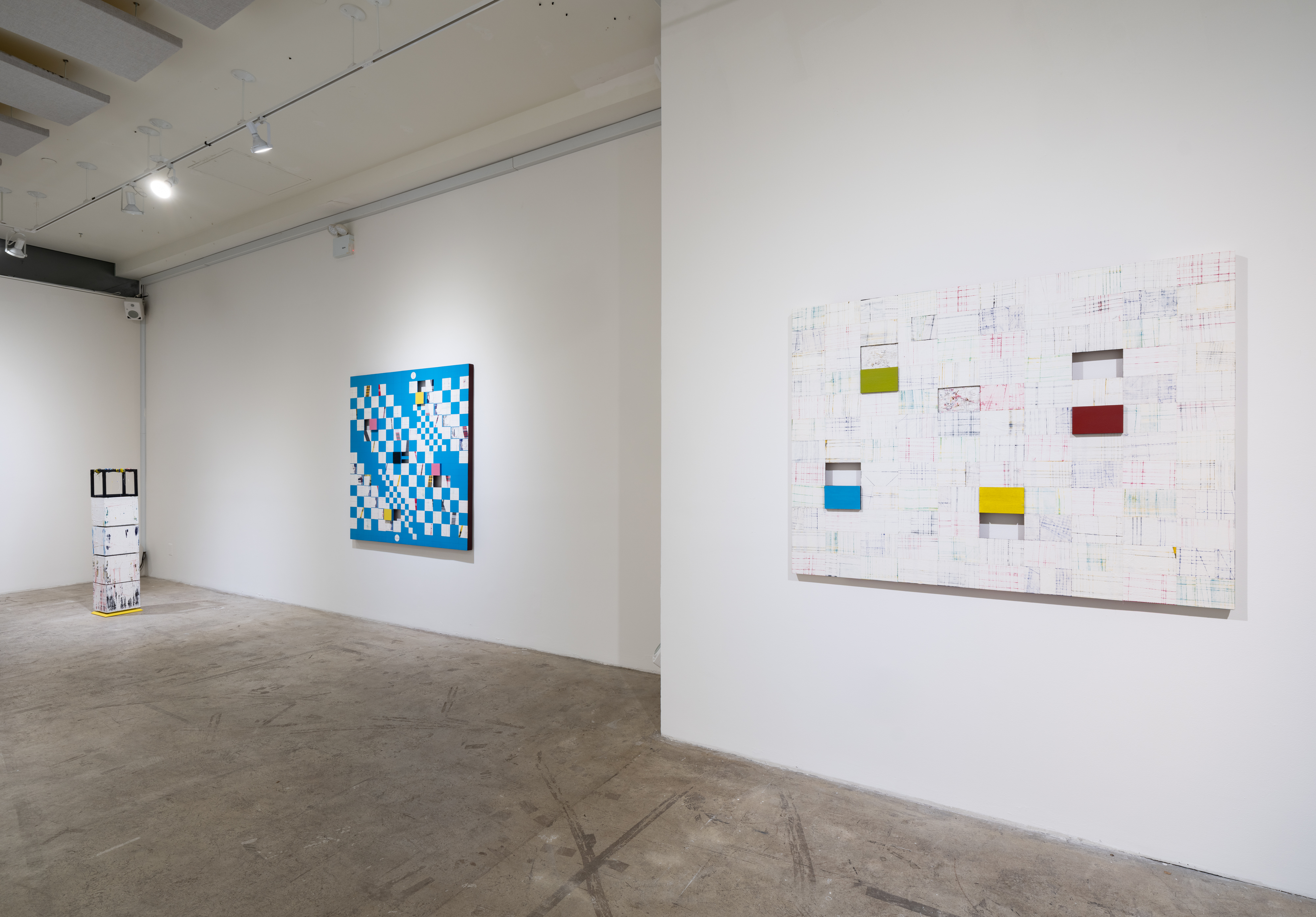
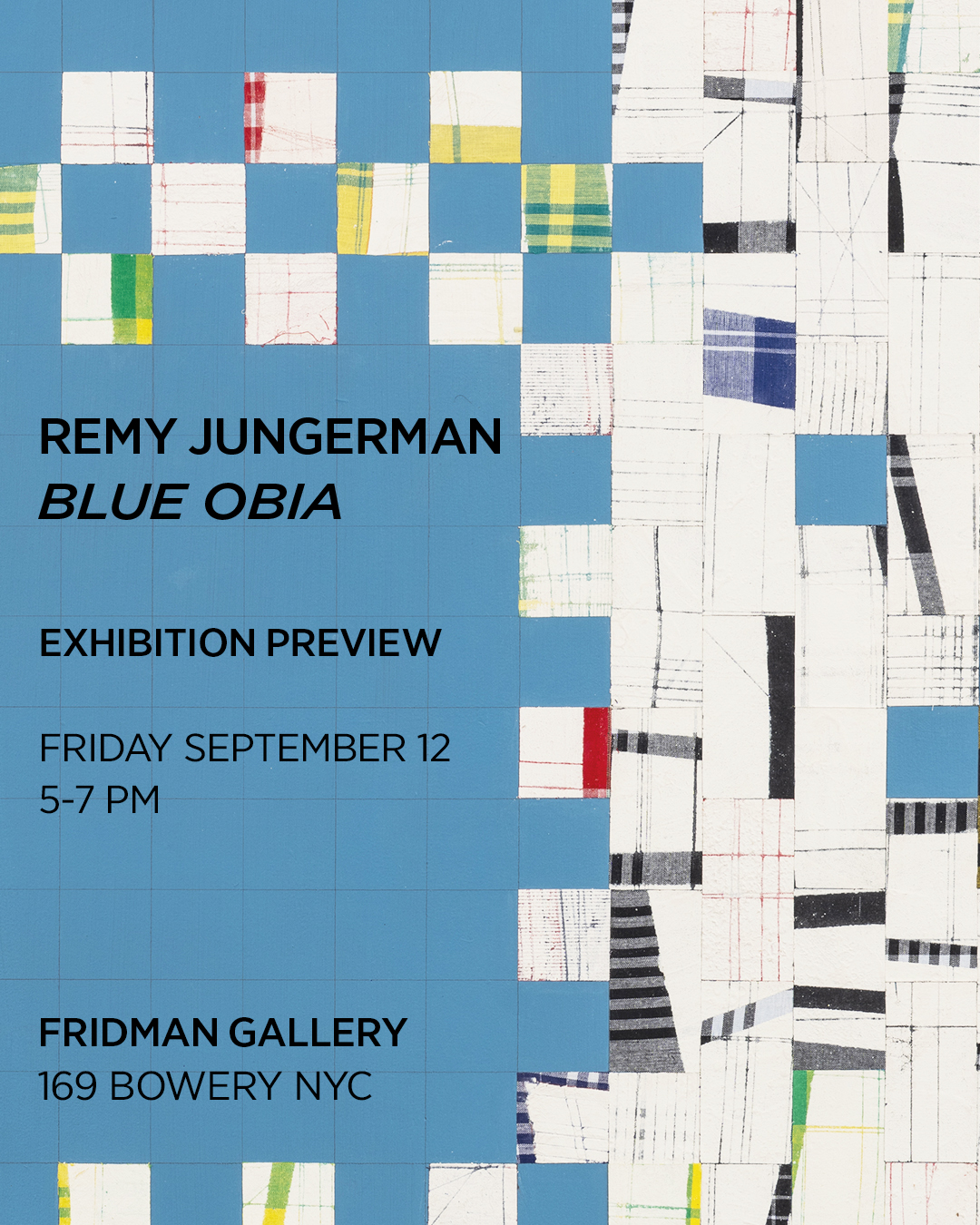
Fridman Gallery is proud to present BLUE OBIA, Remy Jungerman’s second solo exhibition with the gallery, featuring a new body of work that deepens Jungerman’s long-standing engagement with the visual and spiritual ties among Surinamese Maroon culture, West Africa, and 20th century Modernism.
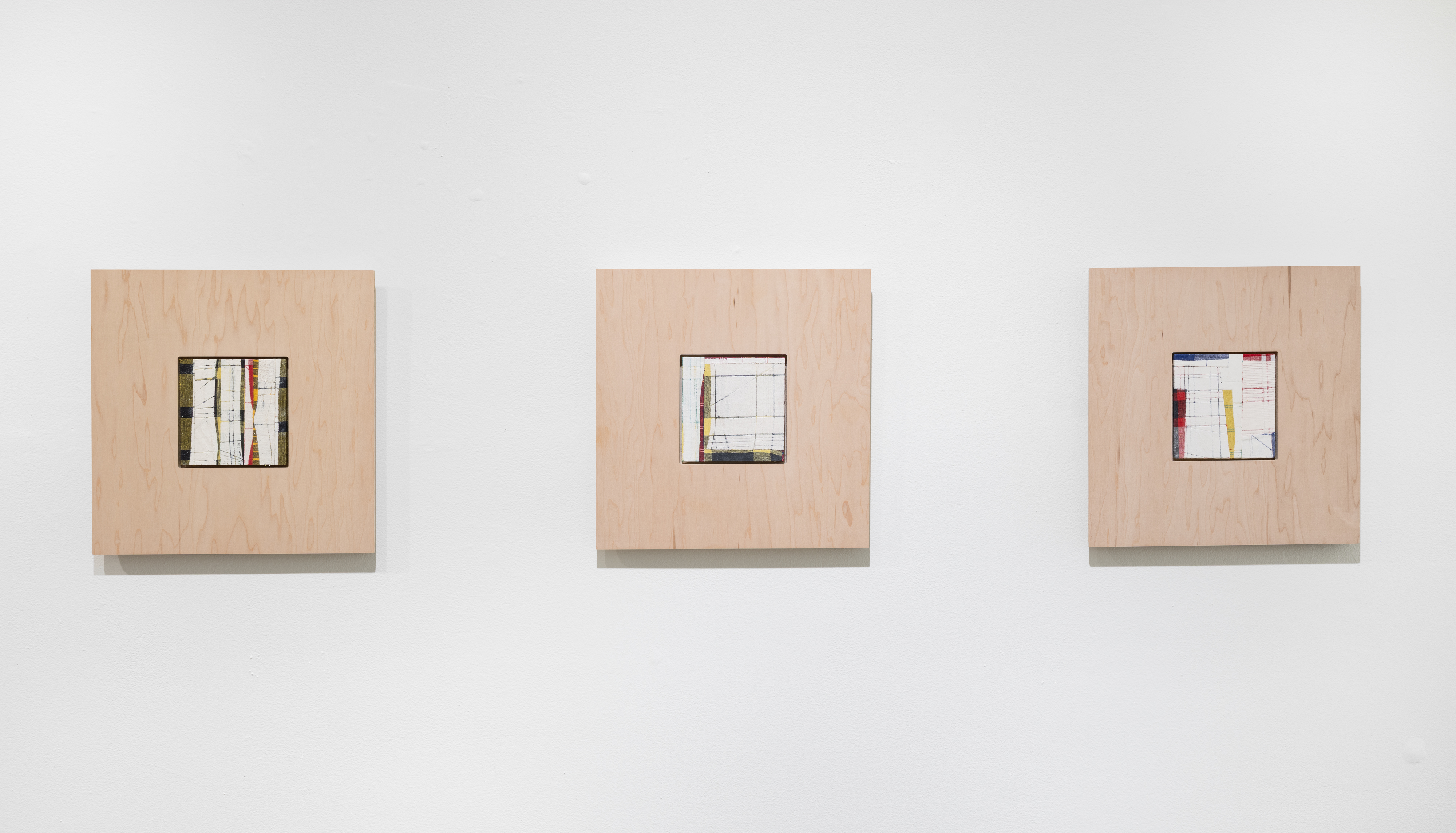
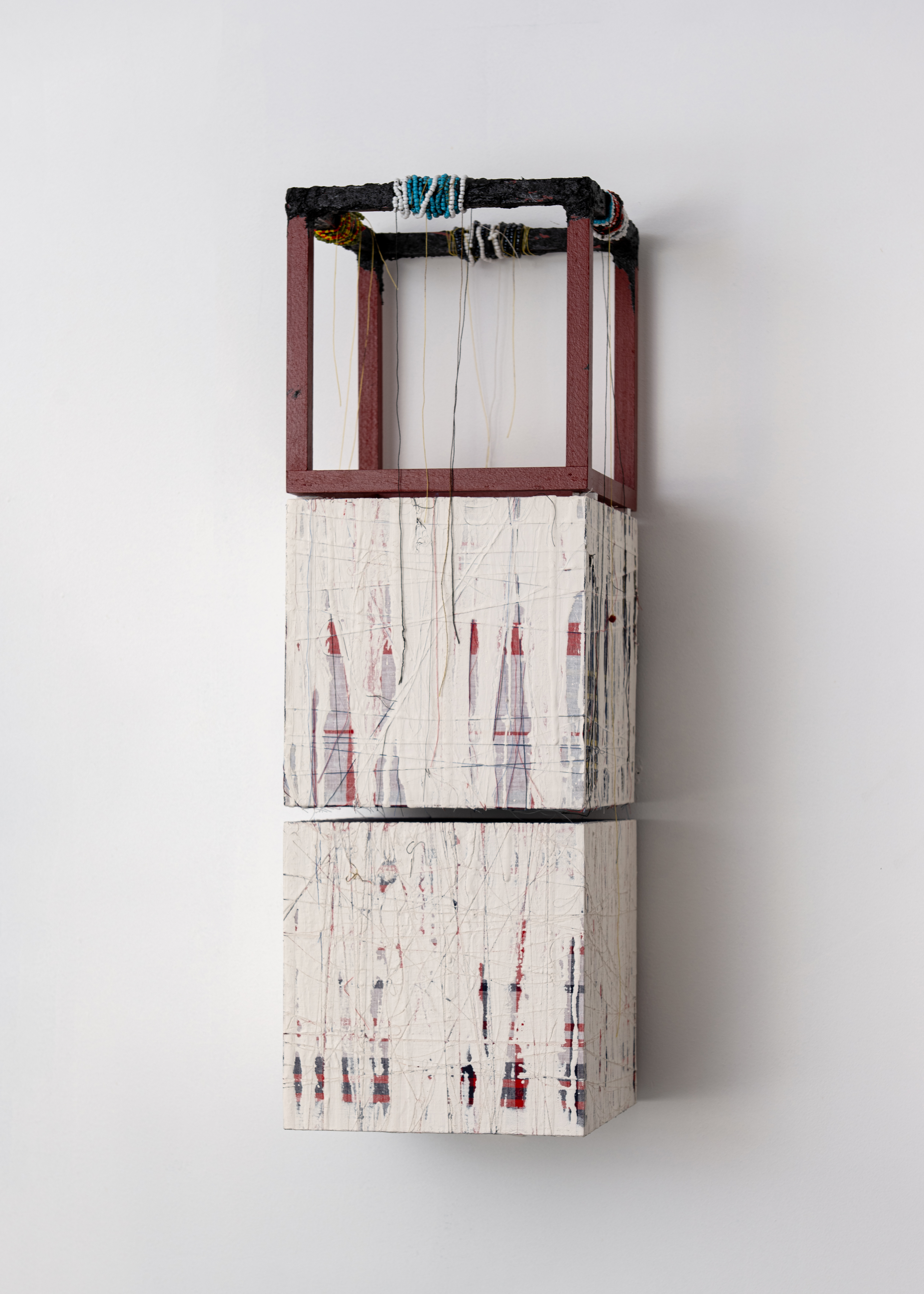
Employing materials deeply rooted in the Afro-Surinamese religion Winti—cotton textile, kaolin clay (pimba), and wood—Jungerman’s panels, cubes, and free-standing sculptures feature richly layered yet minimalist compositions. Invoking the African diasporic practice of Obia (or Obeah or Obiya)—a term associated with healing, protection, and ancestral guidance—this new body of work reflects on the power of ritual to connect the seen and the unseen, the past and the present.
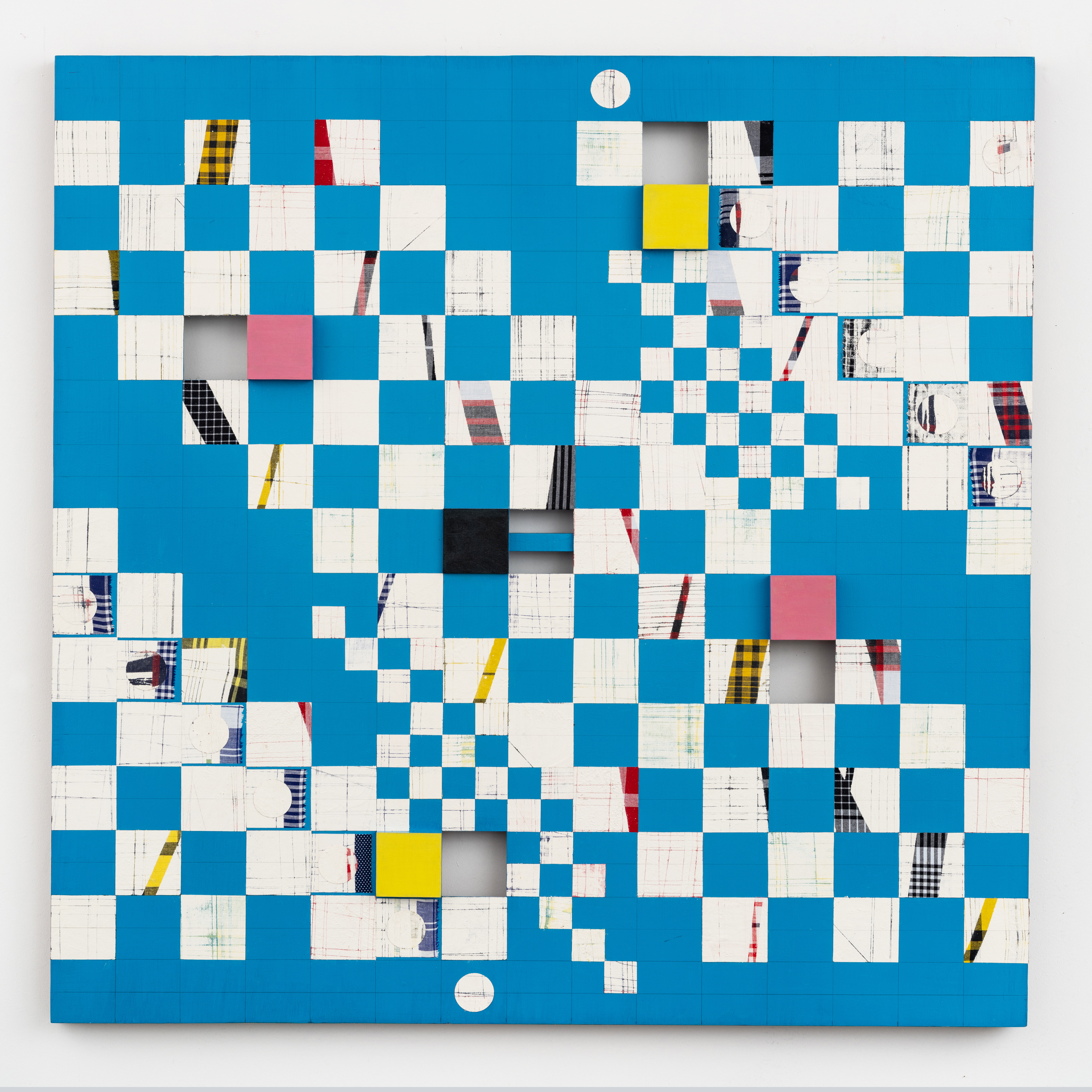
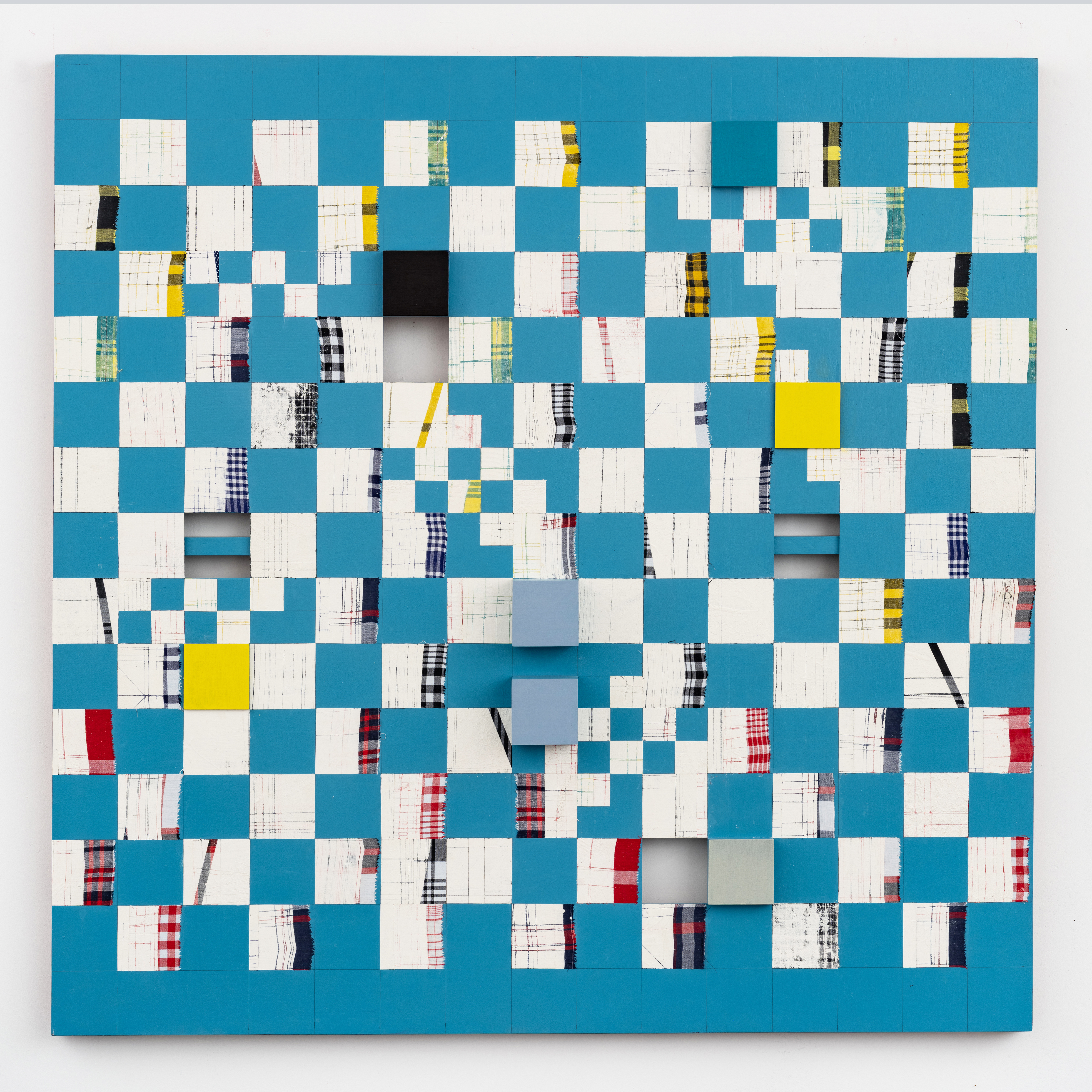
In a new series of panels titled Pimba BAAU, the color blue becomes a central force. BAAU means blue in Saramaccan, the language of the Saamaka, one of the seven Maroon communities in Suriname. Referencing the Surinamese practice of applying a dab of Reckitt’s bluing tablets, a laundry product, behind babies’ ears to protect them from evil influences, Jungerman begins with a blue base from which he builds a grid consisting of pencil lines, textile and kaolin clay.
A large panel titled Three Rivers Black consists of a grid upon which Jungerman “maps” his ongoing project to merge water from the three rivers that connect his life and work—the Cotitca in Moengo, Suriname, the Amstel in Amsterdam, and the Hudson River in New York. Three Rivers Black invites a broader reflection on the historical connections among New York, the Netherlands, and Suriname that resulted from the transatlantic slave trade, and the impact this movement of people and art-making traditions has had on the history of art.
Marking a significant moment in Jungerman’s development as an artist, BLUE OBIA is a space of convergence where geometry meets spirit and repetition becomes ritual.



Works



Exhibition Programming

Publication
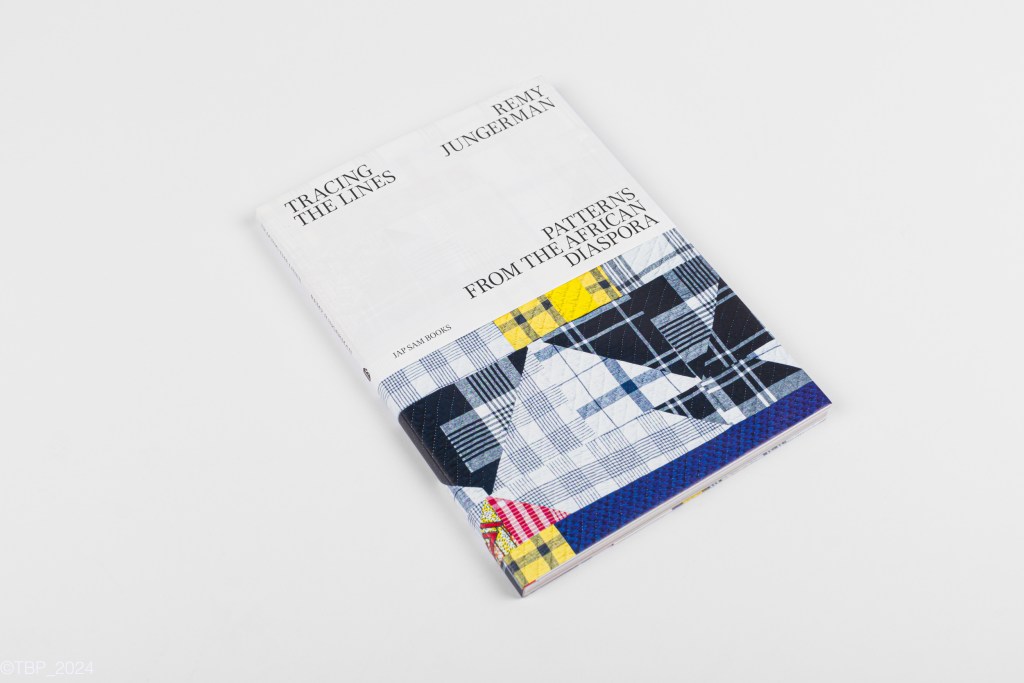
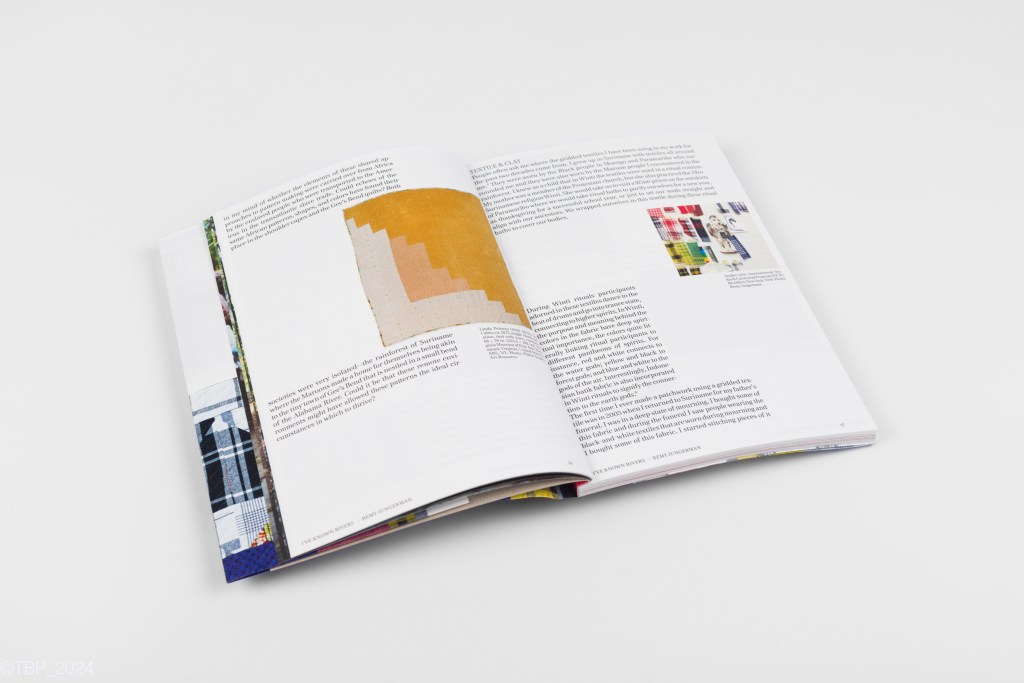
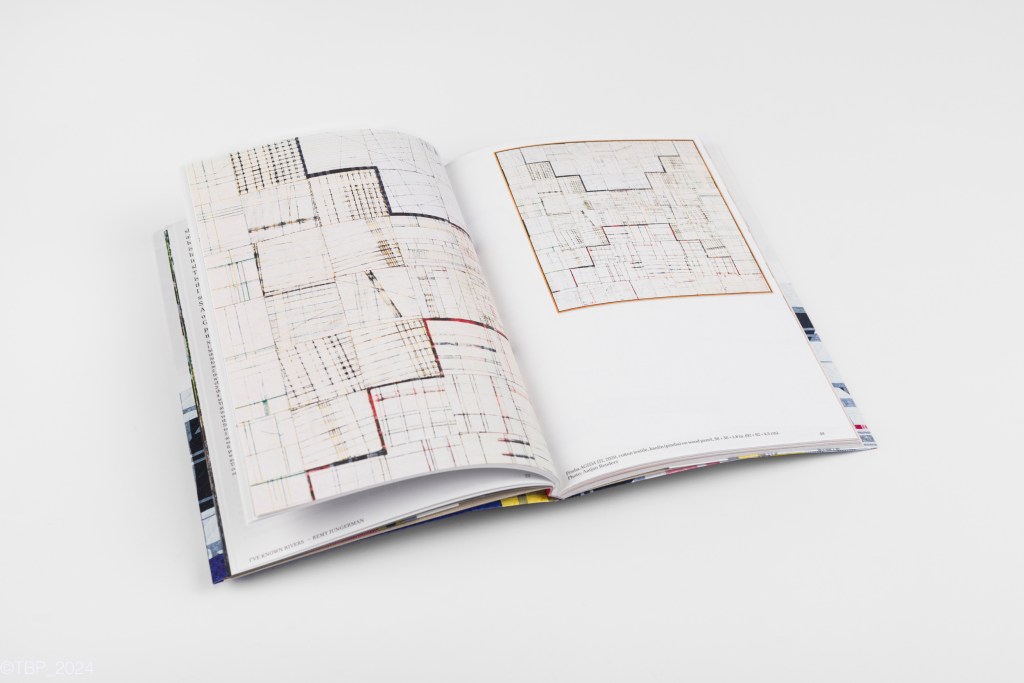
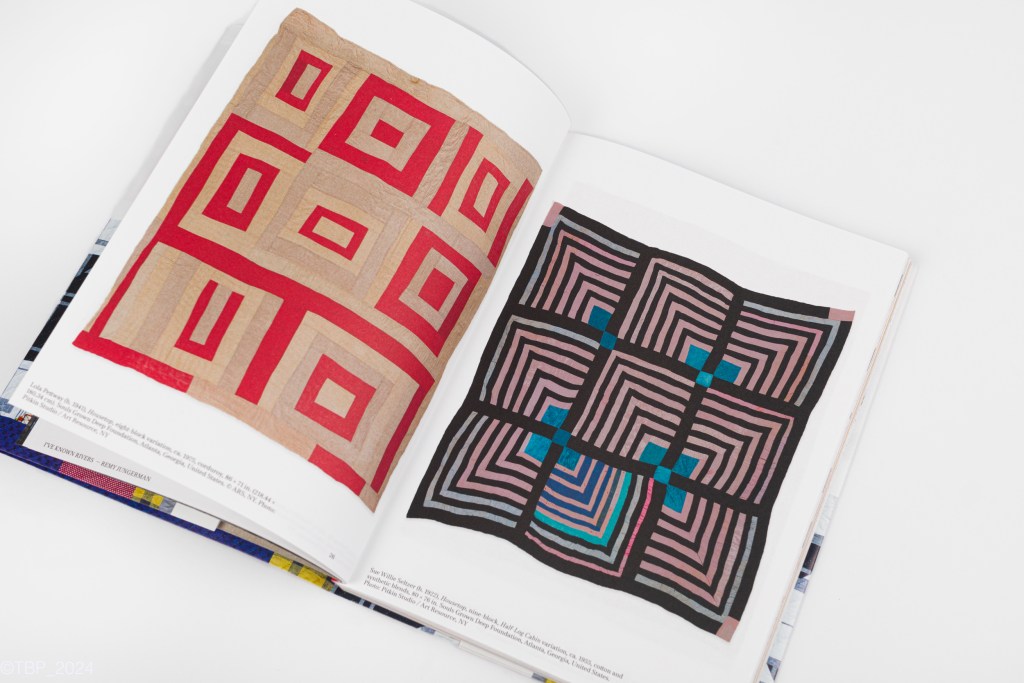
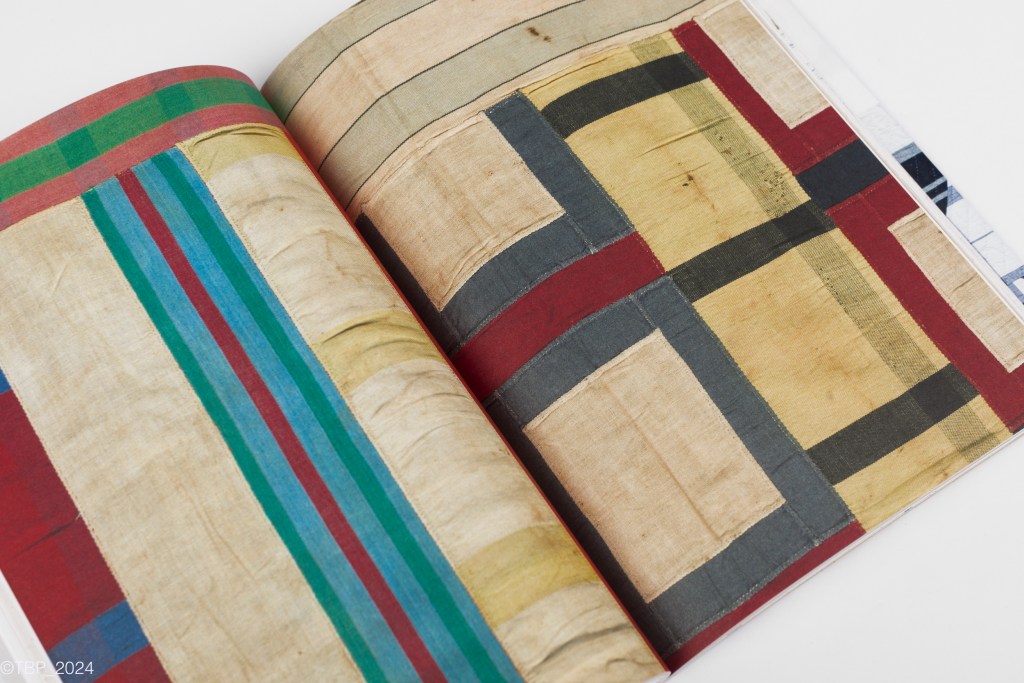
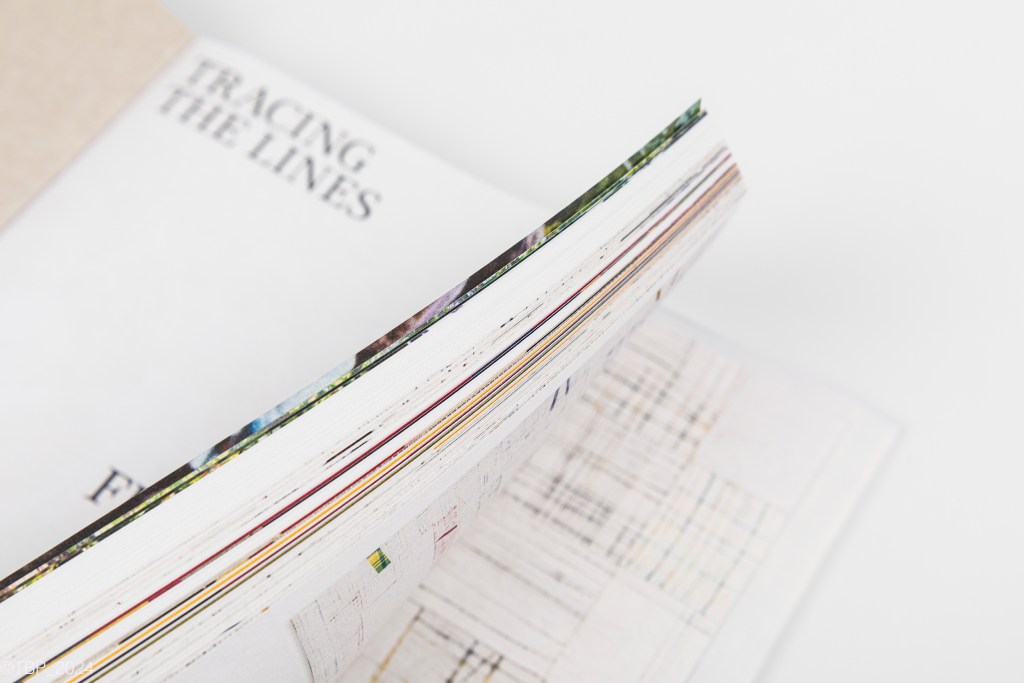
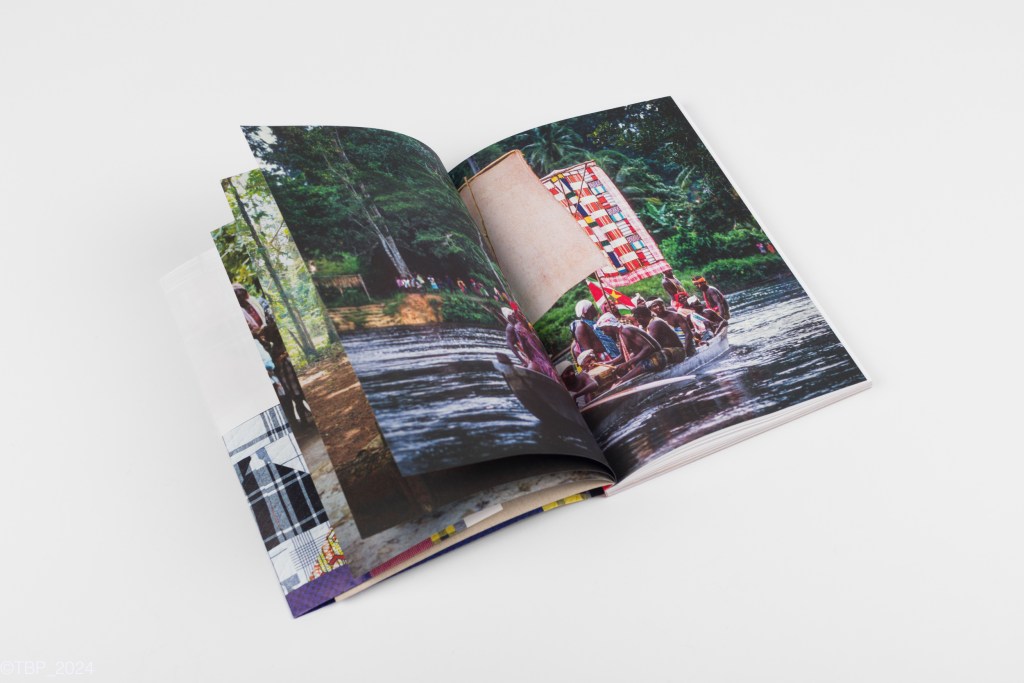
Tracing the Lines – Patterns from the African Diaspora, published by Jap Sam Books, offers an enlightening look inside the work of celebrated artist Remy Jungerman. The book traces how the patterns and shapes found in twentieth-century Maroon shoulder capes from Suriname, as well as the quilts of Gee’s Bend, Alabama, have influenced his recent body of work. A journey through time, memory, and culture, Tracing the Lines also tells the larger story of how geometric patterns from West Africa traveled across the ocean to the Americas during the transatlantic slave trade.






Remy Jungerman (b. 1959) lives and works in New York and Amsterdam. He studied at the Academy for Higher Arts and Cultural Education in Paramaribo, Suriname, and later at the Gerrit Rietveld Academie in Amsterdam.
Jungerman represented the Netherlands at the 58th Venice Biennale in 2019 and was the subject of a major survey exhibition, Behind the Forest, at the Stedelijk Museum Amsterdam (2021–2022). In 2022, he received the prestigious A.H. Heineken Prize for Art. Other honors include the 2008 Fritschy Culture Award from Museum Het Domein.
He is co-founder and curator of the Wakaman Project: Drawing Lines – Connecting Dots, which aims to amplify the global presence of Surinamese artists.
Jungerman’s work has been exhibited internationally at institutions including the Stedelijk Museum (Amsterdam), Brooklyn Museum, El Museo del Barrio, Prospect.3 (New Orleans), the International African American Museum (Charleston), and the Havana Biennale. He is represented by Fridman Gallery (New York), Goodman Gallery (London, Johannesburg, Cape Town), and Galerie Ron Mandos (Amsterdam). His residencies have included Art Omi, ISCP (New York), and Tembe Art Centre (Moengo, Suriname).
Jungerman’s work is held in major public and private collections, including the Stedelijk Museum, Kunstmuseum Den Haag, International African American Museum, Centraal Museum, Tropenmuseum, the Rennie Collection, and the JPMorgan Chase collection, among others.
His publications include Where the River Runs (2019), recipient of the AIGA 50 Books | 50 Covers award; Behind the Forest (2022); and Tracing the Lines: Patterns of the African Diaspora (2024), all published by Jap Sam Books.