Mad Heart, Be Brave
Curated by Sadaf Padder
June 18 – August 08, 2025

Fridman Gallery presents Mad Heart, Be Brave, a group exhibition curated by Sadaf Padder and inspired by Kashmiri poet Agha Shahid Ali (1949–2001), known for his lyrical reflections on longing, memory and emotional terrain.
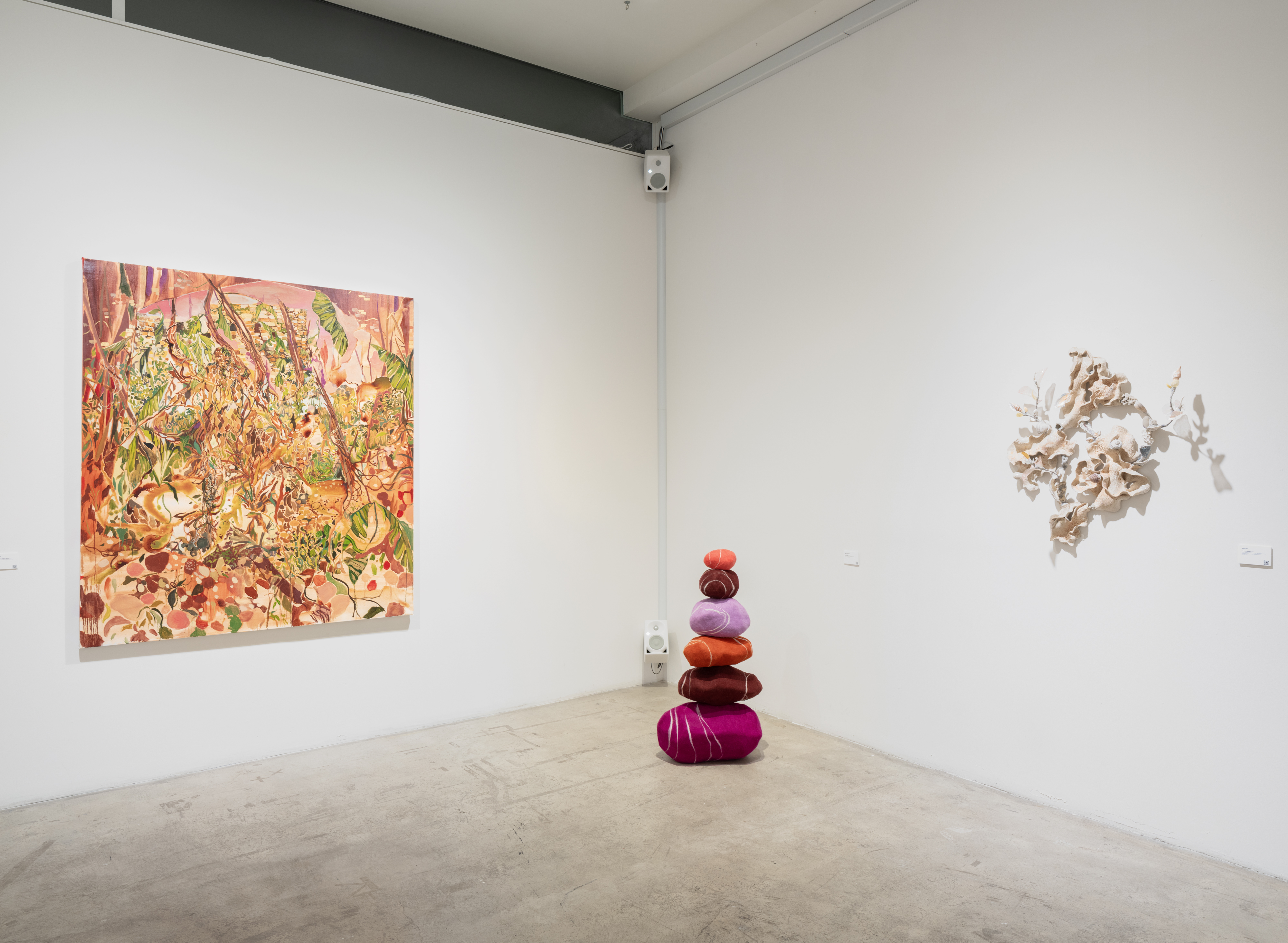
Featuring artists working across painting, sculpture, video, sound, and mixed media, Mad Heart, Be Brave challenges received ideas of home, proposing instead a fluid, generative space shaped by rupture, return, and reinvention. The exhibition catalyzes landscapes, mythologies, and objects into vehicles of self-determination, engaging both place-making and space-making as acts of reclamation. Through hyperlocal and ancestral materials, time-honored practices, and the mythic imagination, the artists trace nonlinear histories and assemble new constellations of belonging.
“If home is found on both sides of the globe, home is of course here—and always a missed land.” – Agha Shahid Ali, Promised Lands (2001).
Featured Artists:
Saks Afridi
Zeerak Ahmed
Alia Ali
Shuyi Cao
Laurena Finéus
Chitra Ganesh
Ruth Jeyaveeran
Arghavan Khosravi
Farah Mohammad
Azadeh Nia
Kwesi O. Kwarteng
Sahana Ramakrishnan
Zelmira Rizo
Shahzia Sikander
Arleene Correa Valencia


Arleene correa Valencia uses traditional Amate paper to connect ancestral and present-day migrations, exploring how losing can be a noble, communal act of resistance and resilience in the face of displacement. Inspired by the Codex Boturini, these scrolls honor her community’s enduring strength and the painful complexities of returning home.
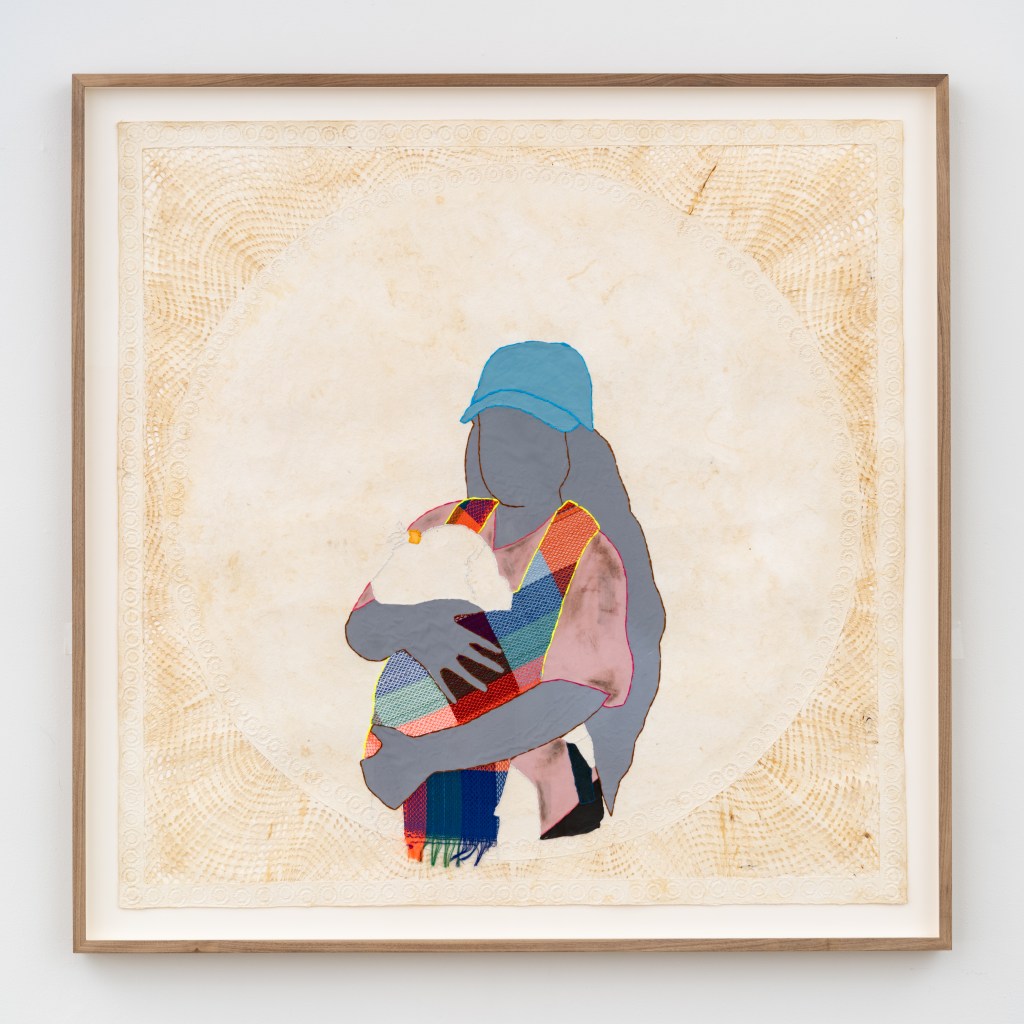
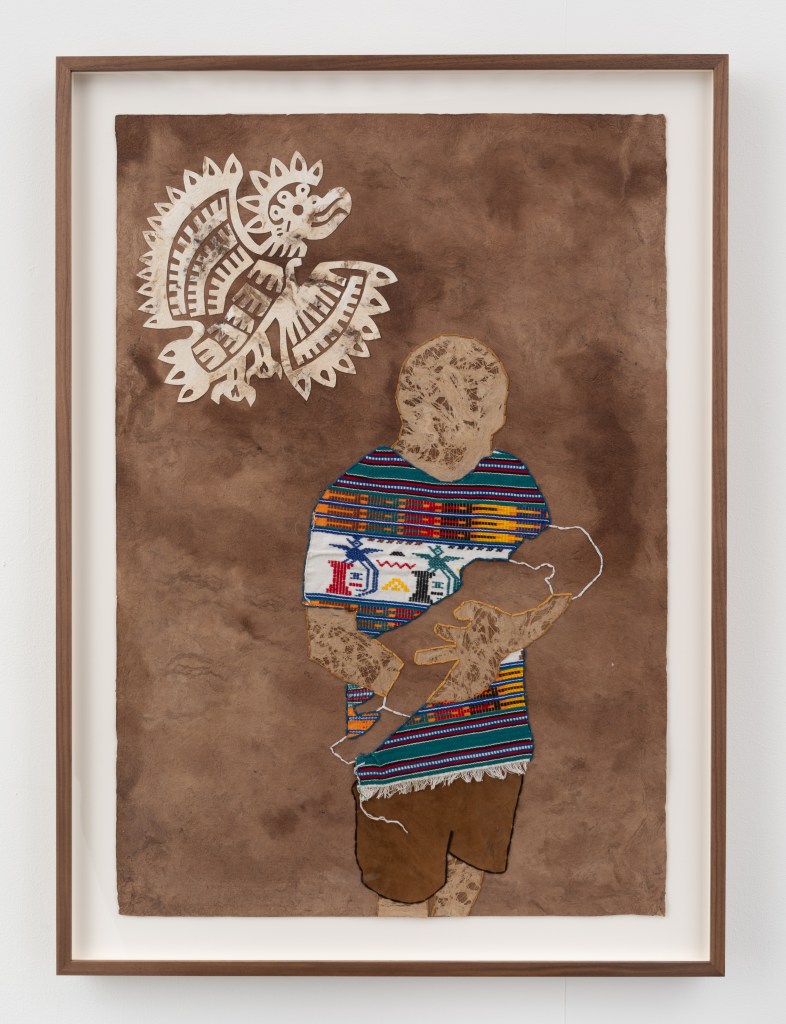
Ahora Entiendo Todo / I Now Understand, 2024
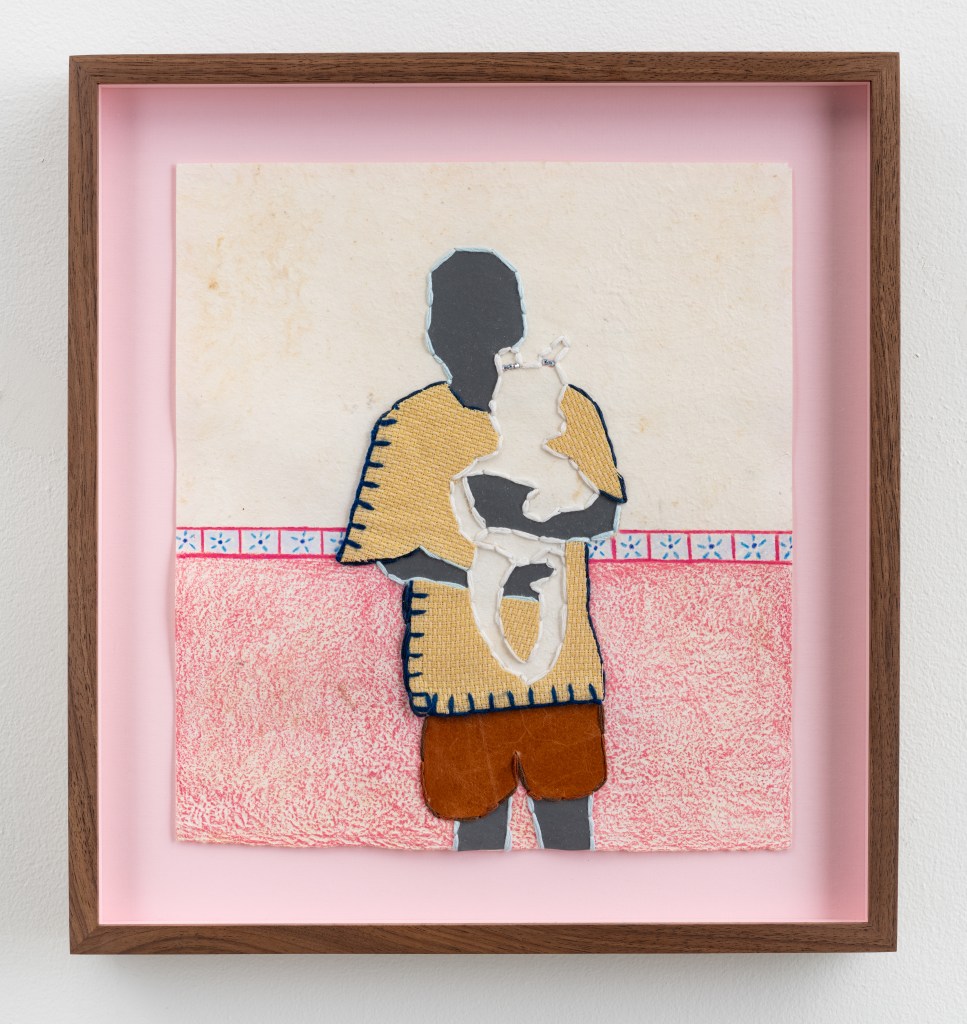
If home is found on both sides of the globe, home is of course here—and always a missed land.
– Agha Shahid Ali
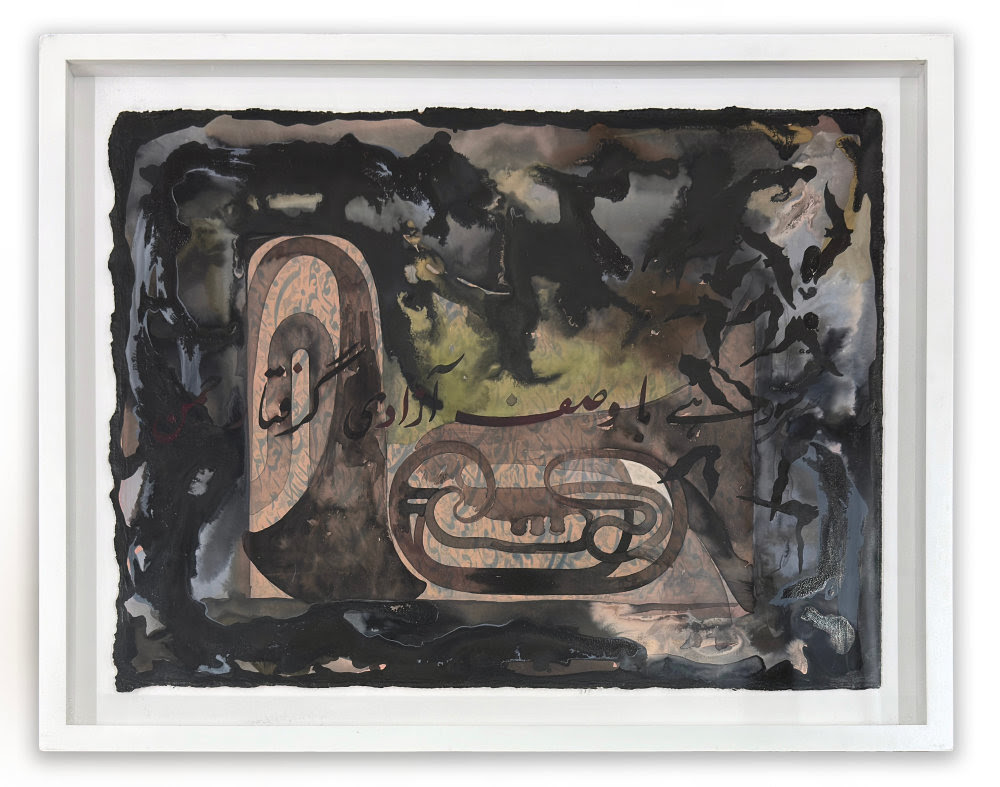
Shahzia Sikander transforms drawing into a meditative space where language, identity, and geography intertwine, using ink and poetry to explore the shifting boundaries between freedom and confinement. Inspired by a Mirza Ghalib ghazal, the work reflects on how our dreams and constraints shape us, inviting viewers to see these borders as fluid rather than fixed.
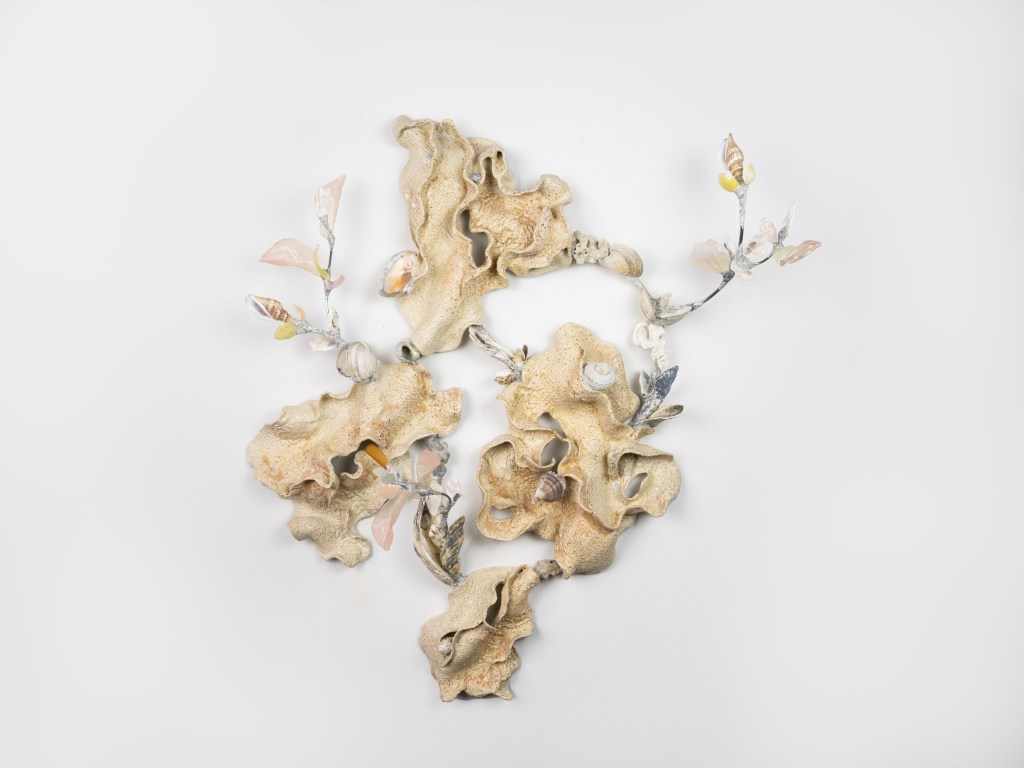
Shuyi Cao interweaves organic and synthetic materials—like seashells, coral, driftwood, and recycled plastic—into hybrid forms that blur boundaries between the natural and the man-made. Through these assemblages, she transforms fragments into imaginative beings that evoke ecological flux, myth-making, and the restless state of contemporary matter.
Sahana Ramakrishnan weaves myth, science, and personal storytelling to examine our connections to the “Other,” layering oil and mixed media in works inspired by Global South mythologies and South Asian painting traditions. Her richly detailed surfaces, often adorned with gold leaf and rhinestones, evoke reverence and transformation.
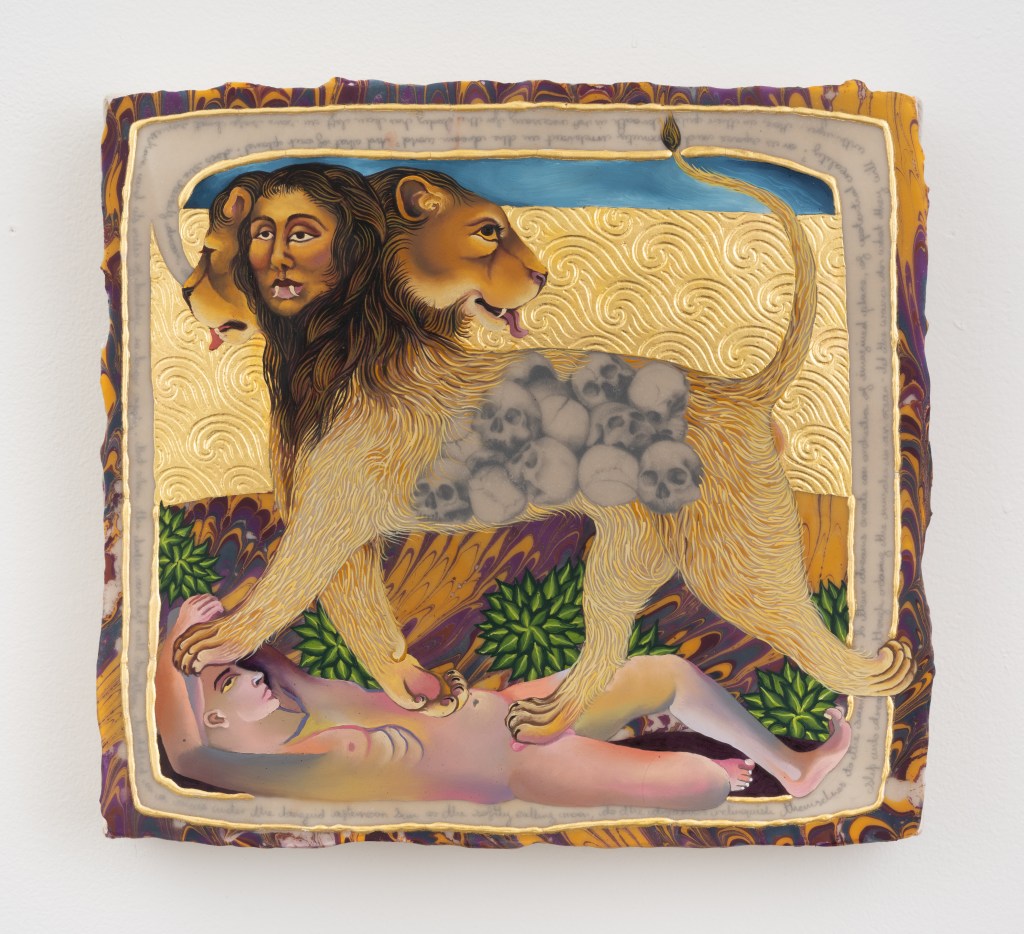
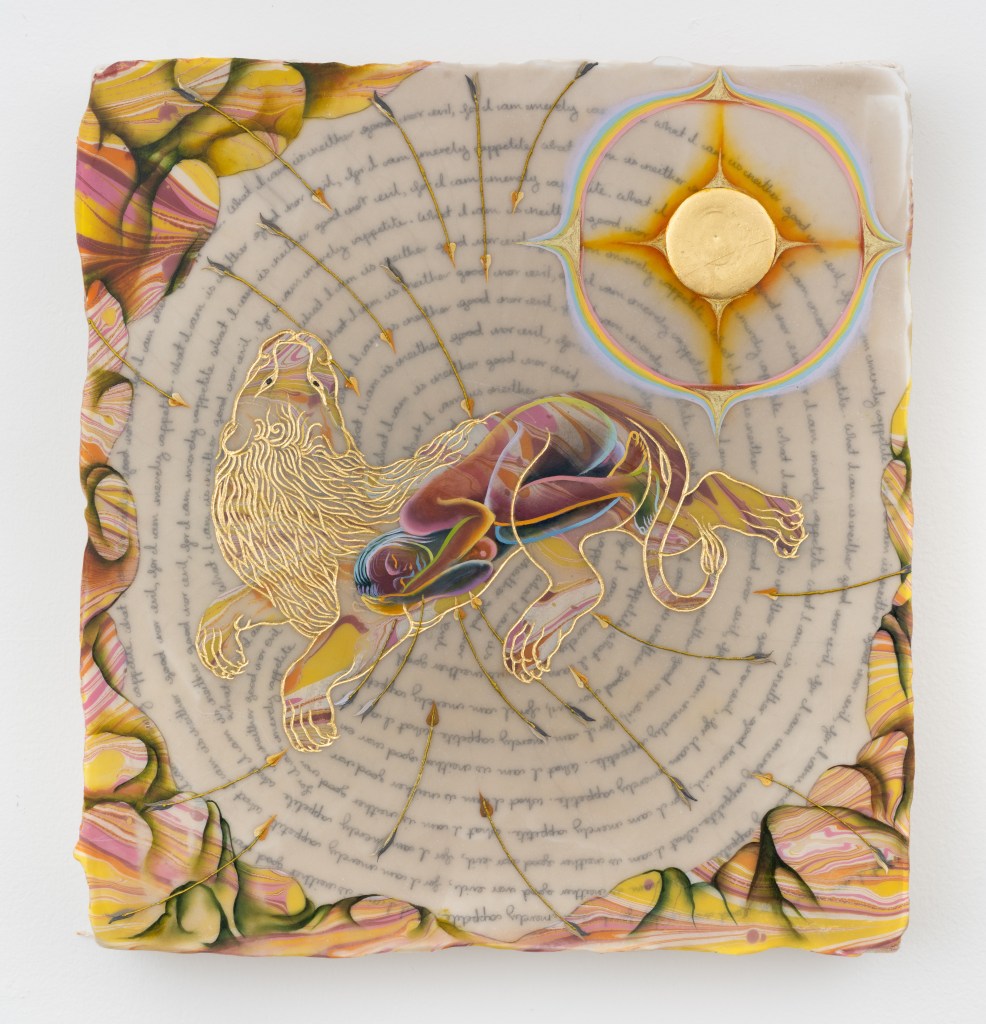
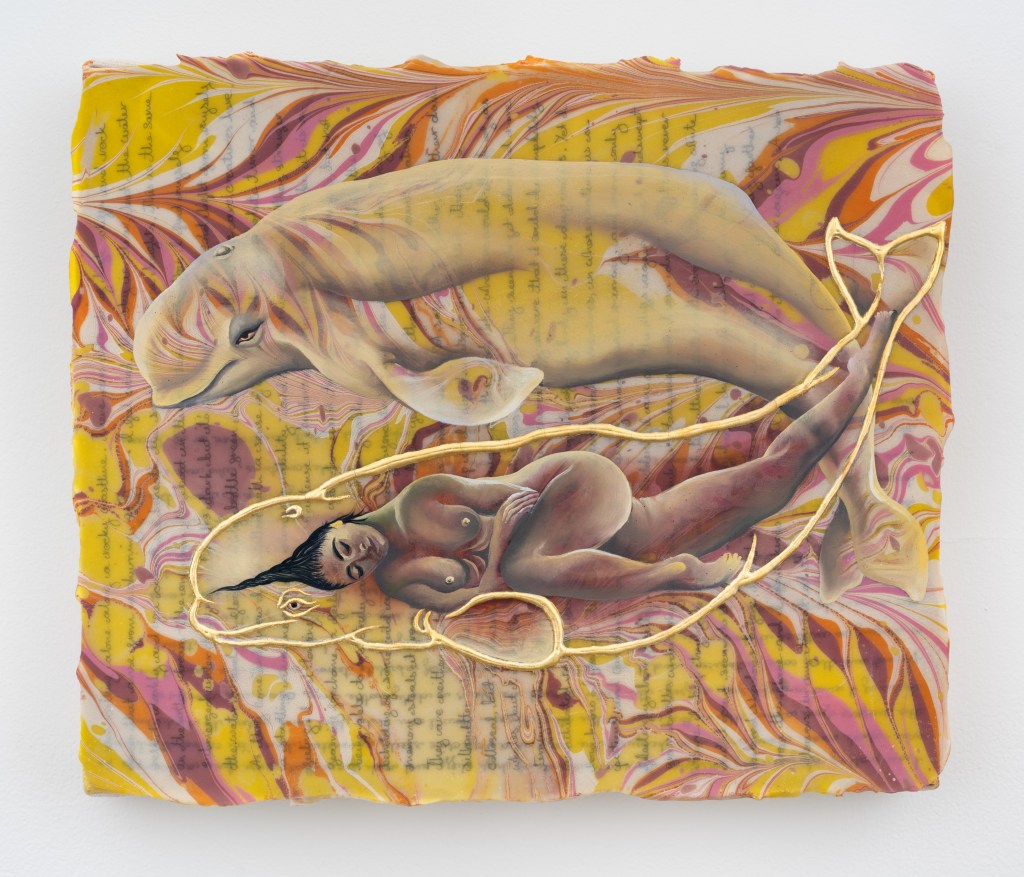
They make a desolation
And call it peace
– Agha Shahid Ali
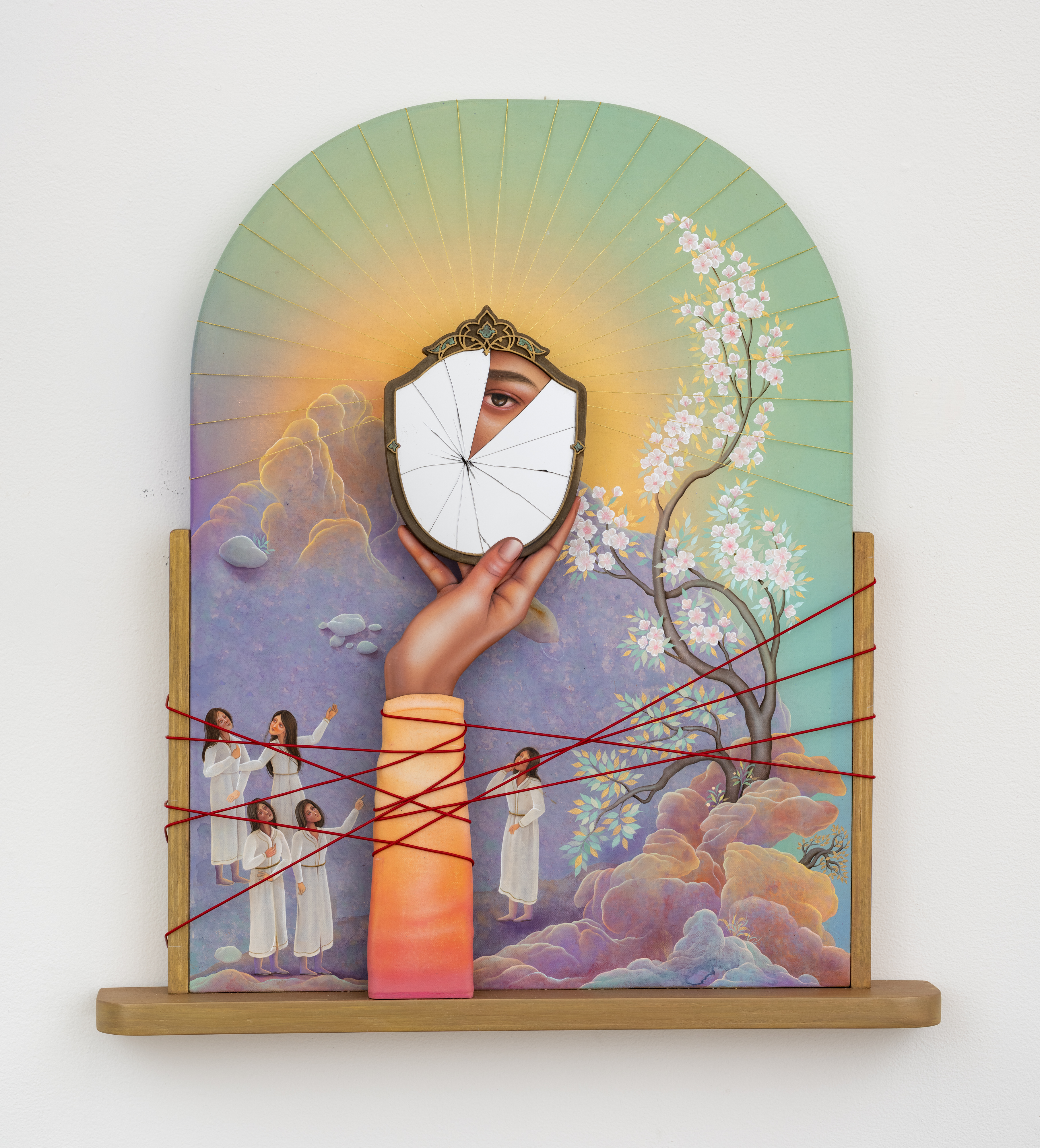
Arghavan Khosravi reimagines Persian miniature painting and manuscript illustration, using intricate compositions, symbolic dualities, and layered iconography to explore themes of visibility, concealment, and feminist critique. Combining traditional aesthetics with contemporary narratives, she reconstructs historical motifs to question patriarchy, foreground re-gendered figures, and reveal hidden power within fragmented identities.
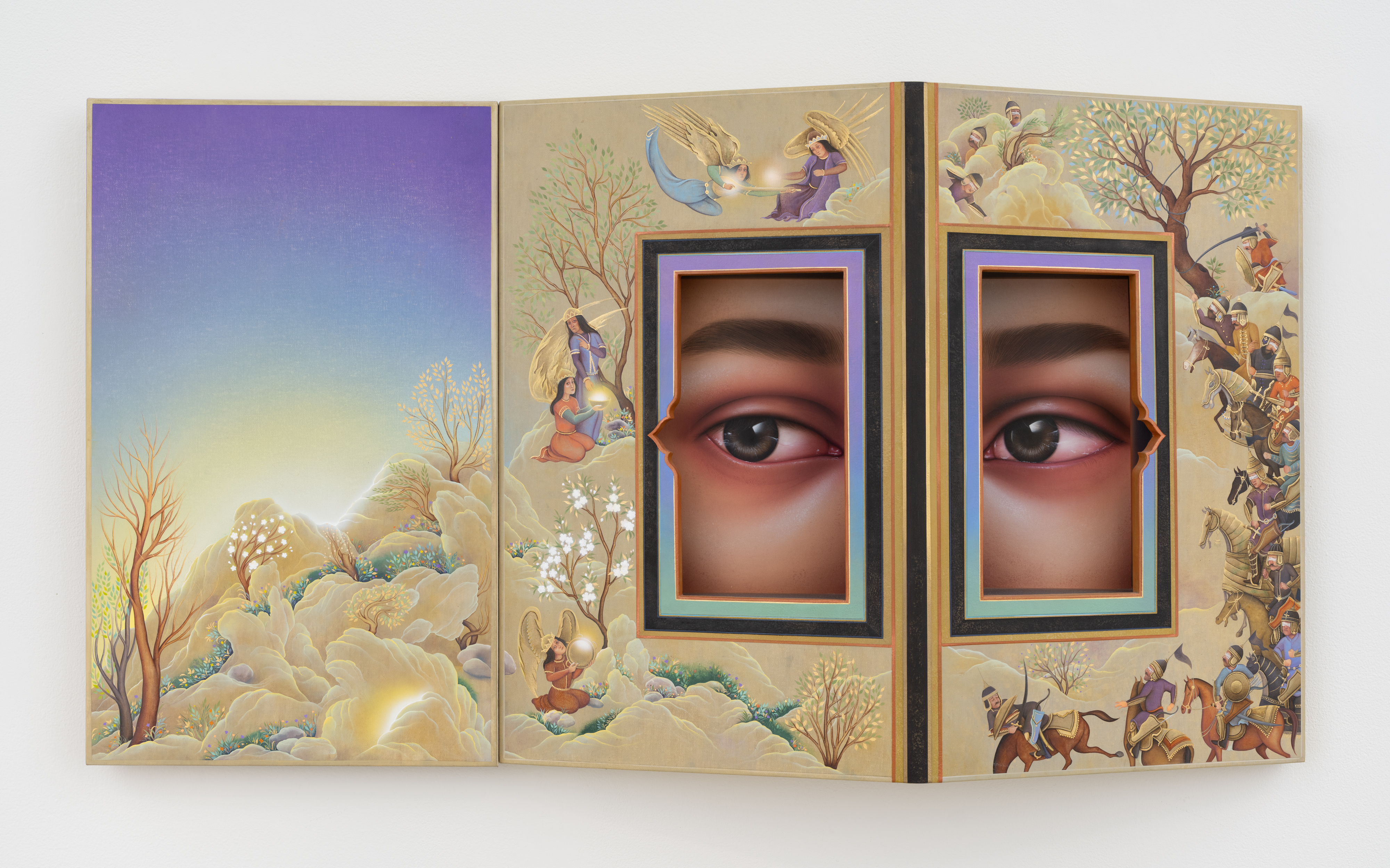
Azadeh Nia translate psychological states into richly symbolic scenes, balancing beauty with undercurrents of tension and unease. Her layered compositions often weave cultural landmarks, subtle human traces, and narrative clues to evoke memories, storytelling, and the charged feeling of looking and being looked at.
Kwesi O. Kwarteng weaves together diverse textiles from around the world as symbolic “voices” in a global dialogue, celebrating cultural distinctiveness while highlighting shared connections. Through layered patterns, colors, and fabrics rich with meaning, his textile works become hospitable spaces of storytelling.
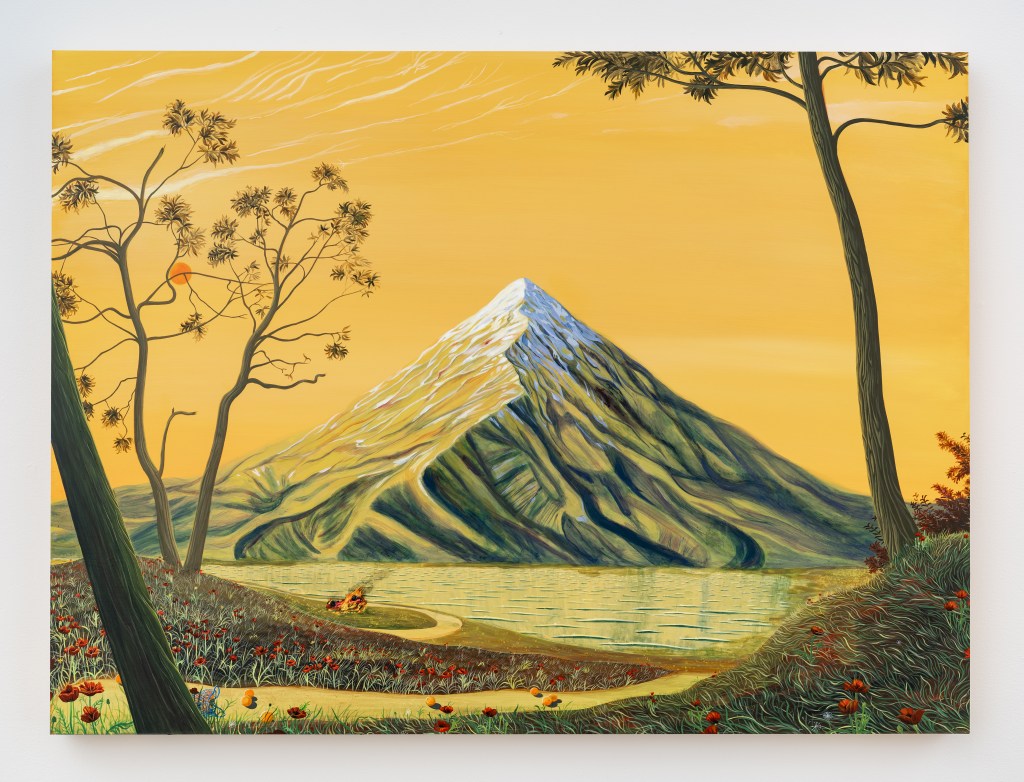
In the mountains, flower by flower, they’re planting the sun, 2025
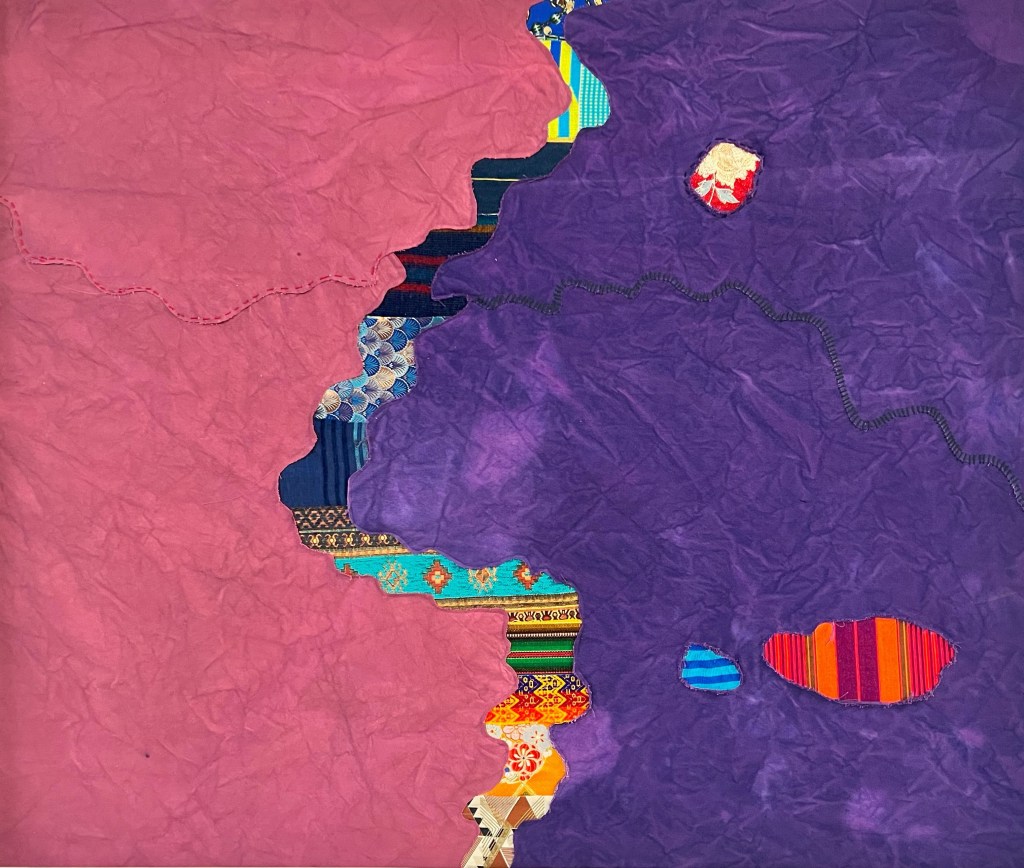
Tell me what I was like before I existed.
– Agha Shahid Ali
Laurena Finéus explores Black geographies, maroon thought, and migratory histories through imagined painterly landscapes that reframe distance and inaccessibility as generative spaces. Drawing on Haitian sites, folklore, and historical critique, she collapses time and place to question how memory, myth, and history are constructed and narrated.
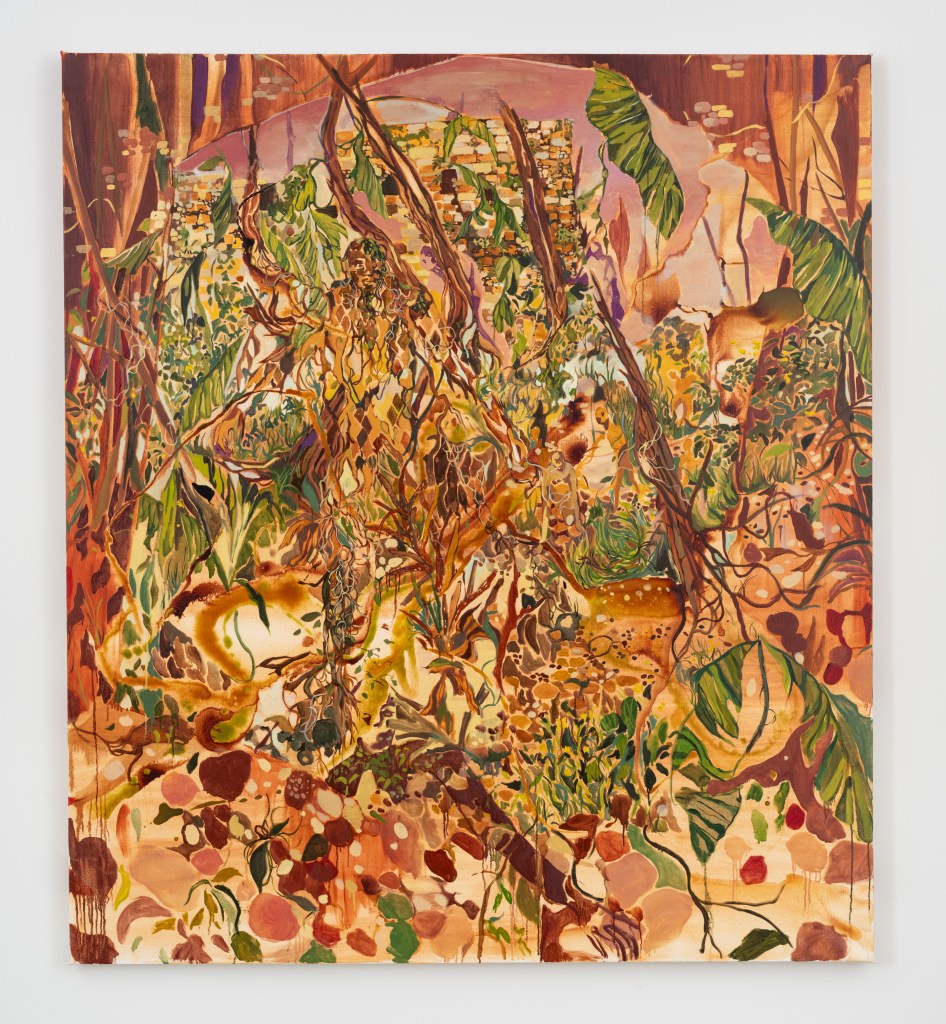

Ruth Jeyaveeran leyers fibers like sediment to hold time, memory, and place. Through this tactile process, the wool transforms into textured landscapes and organic maps that trace geological forms, migration routes, and the body’s imprint.
Farah Mohammad layers printmaking, painting, and archival imagery. Through intricate compositions, she explores how familial and political histories shape inner worlds and open pathways for self-inquiry and compassion.
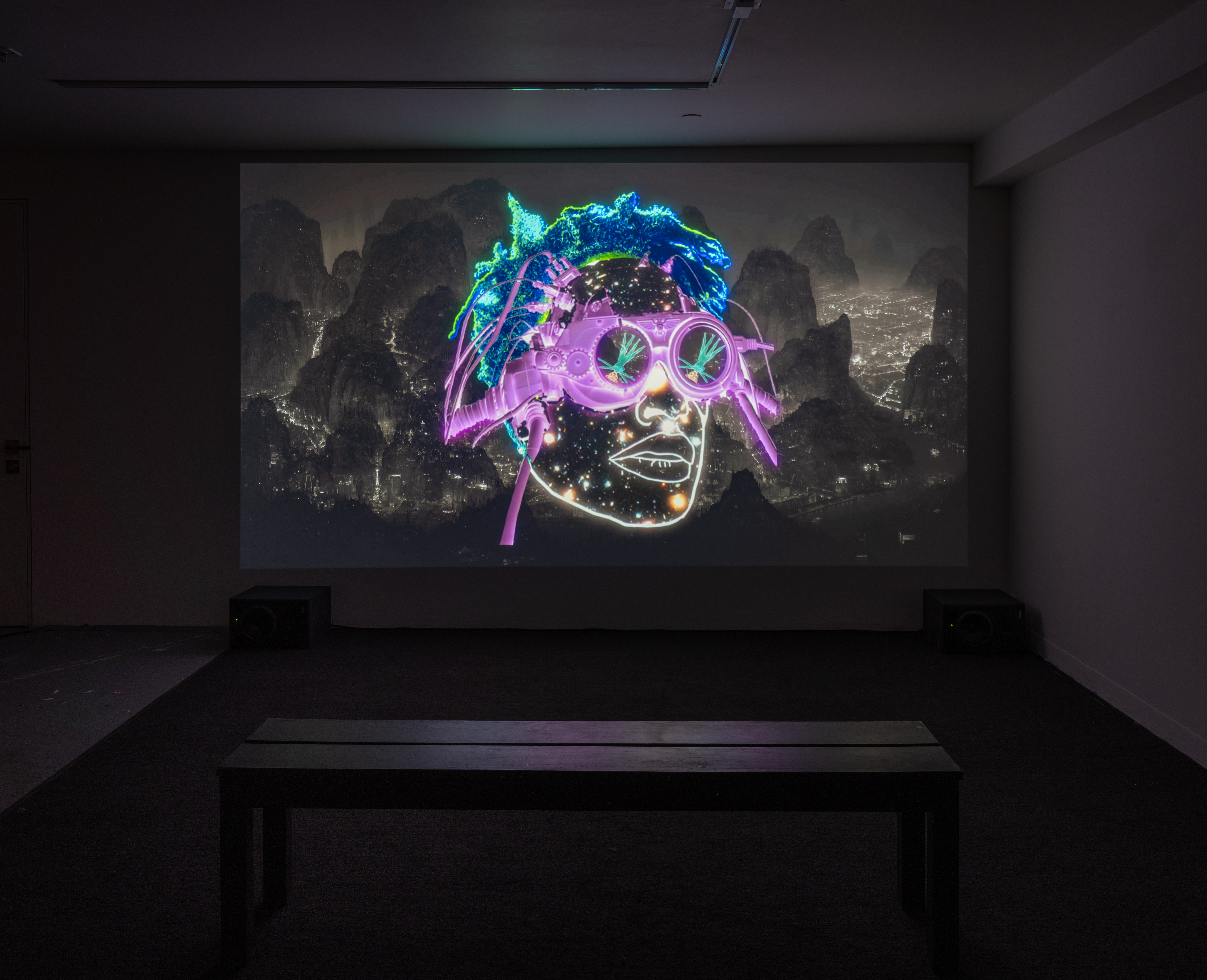
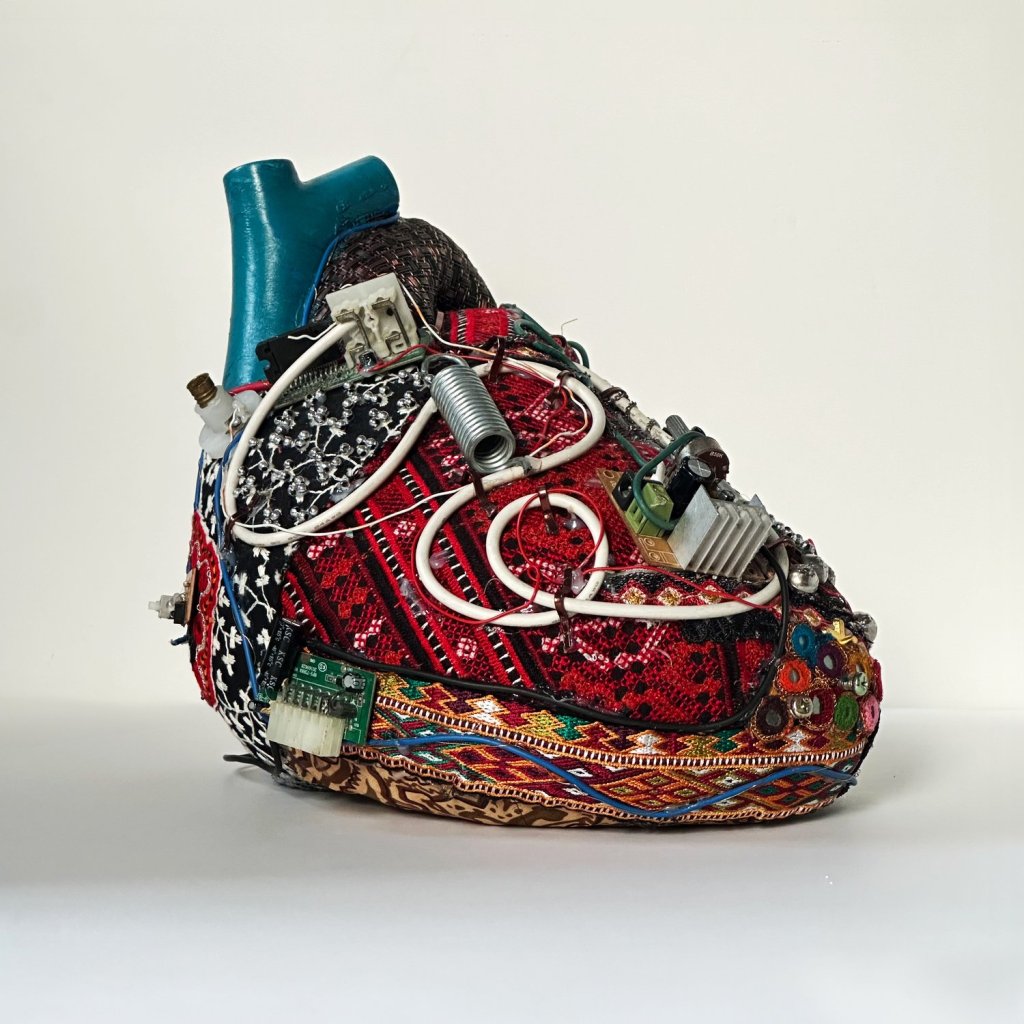
Saks Afridi creates sculptural hybrids that blur the line between memory, technology, and ancestral tradition. he weaves cultural symbolism with speculative futures where love and identity live in both heart and machine.


Then be pitiless you whom I could not save—
Send your cries to me, if only in this way:
I’ve found a prisoner’s letters to a lover—
One begins: “These words may never reach you.”
Another ends: “The skin dissolves in dew
without your touch.” And I want to answer:
I want to live forever. What else can I say?
It rains as I write this. Mad heart, be brave.
– Agha Shahid Ali, A Country Without a Postcard
About the Curator
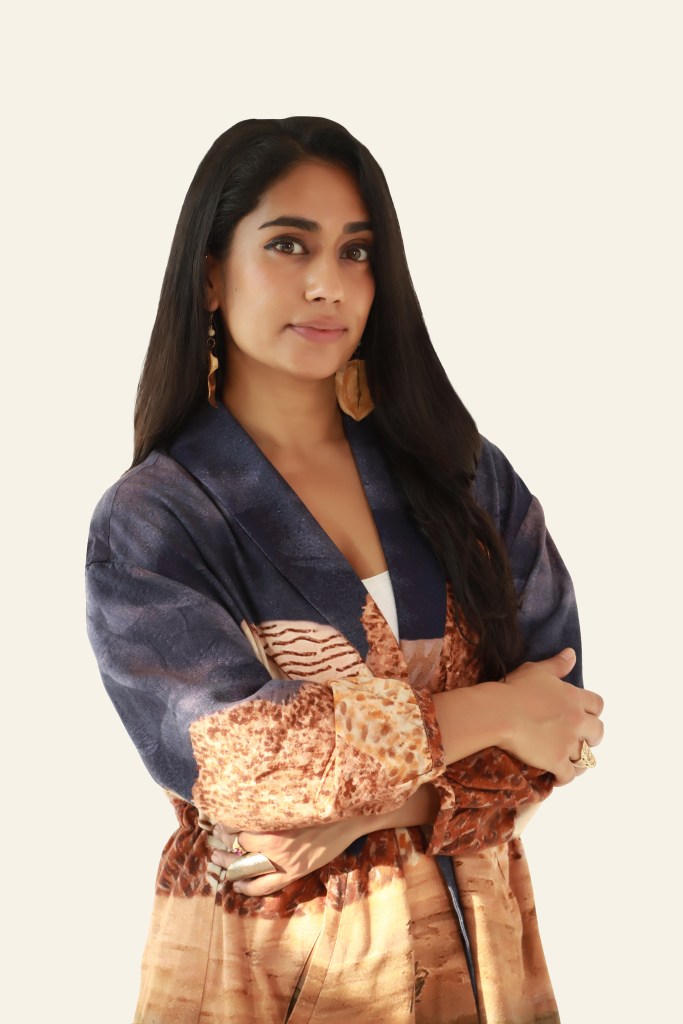
Sadaf Padder is a Brooklyn-based independent curator whose work spans the U.S., from Philadelphia to Los Angeles to Martha’s Vineyard. Her curatorial practice explores climate change and neo-mythology, drawing on her background as a public school educator to build bridges across communities.
Padder’s projects have been featured in LA Weekly, Hyperallergic, and Art News, and have led to acquisitions of BIPOC women artists by institutions including the Baltimore Museum of Art, Northwestern University, the Nion McEvoy Foundation, and RISD Museum.
She has contributed writing to Visual AIDS, ARTSY, Up Mag, and Hyperallergic, and is a Create Change alumna with the Laundromat Project, a 2022–23 Emily J. Hall Tremaine Fellow, and a featured ARTSY curator. She serves on the boards of the Vera List Center, 12 Gates Arts, and Grown in Haiti.
Curatorial Essay
Fridman Gallery presents Mad Heart, Be Brave, a group exhibition curated by Sadaf Padder and inspired by the late Kashmiri-American poet Agha Shahid Ali (1949–2001), known for his lyrical reflections on longing, memory, and terrain—both literal and emotional. The title of the exhibition, drawn from Ali’s poetry, becomes a call to inhabit the vulnerable terrain of longing while holding space for imagination. In invoking Kashmir—its history, its contested borders, and its people’s persistent hope—the exhibition pays homage to a region marked by profound beauty, military occupation, contested borders and enduring political rupture. Ali’s vision of Kashmir as homeland and a site of fracture and possibility – becomes a generative metaphor throughout the exhibition.
To invoke Kashmir as a frame, then, is to resist forgetting and invisibility. It is to assert that even in the most surveilled and silenced regions, the act of remembering and re-envisioning—through poetry, sound, pigment, and story—is a radical form of presence. In Mad Heart, Be Brave, artists from across the globe respond to this call. Though their origins and mediums differ, they gather around the poetic force of Ali’s vision, using myth, memory, and material as tools to build, unearth, and reclaim. Kashmir becomes more than a place—it becomes a lens.
Featuring artists working across painting, sculpture, video, sound, and mixed media, Mad Heart, Be Brave challenges received ideas of home, proposing instead a fluid, generative space shaped by rupture, return, and reinvention. The exhibition catalyzes landscapes, mythologies, and objects into vehicles of self-determination, engaging both place-making and space-making as acts of reclamation. Through hyperlocal and ancestral materials, time-honored practices, and mythic imagination, the artists trace nonlinear histories and assemble new constellations of belonging.
Artists Arleene Correa Valencia, Kwesi Kwarteng, Ruth Jeyaveeran, and Alia Ali reclaim traditional materials and formats—such as amate paper, wool, and textiles—once used to document migration and ritual, transforming them into conduits of living memory and cultural interconnectedness. These works invoke the visual and tactile language of survival, using the handmade as a site of protest and proof of continued existence.
Others, such as Laurena Fineus, Azadeh Nia, Zelmiro Rizo, Saks Afridi and Farah Mohammad engage in myth-making through symbolic architectures and reconstructed landscapes. Memory becomes spatial, processed through layered imagery, hybrid forms, and the poetic use of pigment and repetition. Through dreamlike compositions, these artists reflect on cities, rooms and lands remembered and reimagined.
Arghavan Khosravi expands the visual language of Persian miniatures, reworking aesthetic codes to center stories of resistance, transformation, and gendered subjectivity. Traditional margins and frames are disrupted or dissolved altogether. Figures—once sidelined or veiled—emerge as central agents in surreal backdrops. Recurring motifs such as mirrors, and thread suggest paradoxical states: of captivity and freedom, fragmentation and repair, visibility and concealment. Chitra Ganesh and Sahana Ramakrishnan also borrow from classical traditions, such as Barahmasa miniature and Tanjore painting, collapsing time into nonlinear, dreamlike sequences. Drawing from myth, historical references, and explorations of the environment, their works construct palimpsests of personal cosmologies and symbolic worlds—often peopled by hybrid beings and fluid iconographies. Here, the sacred and the subconscious intertwine.
Zeerak Ahmed’s sound installation emerges as a portal to matrilineal histories and suppressed archives. The soundscape recovers songs, voices, and rhythms that once animated domestic and sacred spaces— fractured by migration and political rupture. These sounds do not simply recall, they carry – feminine resilience and the will to transmit.
Material hybridity plays a central role throughout. Shuyi Cao fuses organic and synthetic matter—sea glass, coral bones, salvaged metal and plastic—into sculptures that resemble fossils from imagined futures. These paradoxical objects evoke drift, ecological rupture, and spiritual inheritance. They are maps not of nations, but of migrations—of tide, memory, and erosion.
Mad Heart, Be Brave does not seek to resolve the tension between loss and becoming—the works gathered here dwell within it and harness myth and memory as co-conspirators. The exhibition offers an internal map spanning many places—where emotional and mythic landscapes guide the compass, and each work is a gesture toward home. Memory is not simply a return—it becomes the architecture from which we build onward.
Exhibition Programming

Opening Reception
June 18 • 6-8 PM

Curatorial Walkthrough and Performance by Zeerak Ahmed
June 20 • 6-8 pm